The Digital Supply Chain: How IoT and AI Are Transforming Logistics
The Digital Supply Chain Revolution
The convergence of IoT, artificial intelligence, and cloud computing is creating supply chains that are not just connected but intelligent. Digital supply chains can sense disruptions before they occur, predict demand with unprecedented accuracy, and optimize operations in real-time. This is not a future vision — it is happening now.
IoT: The Nervous System of Modern Supply Chains
IoT sensors embedded throughout the supply chain provide real-time data on location, temperature, humidity, shock, and tilt. This data transforms supply chain management from periodic snapshots to continuous monitoring. Applications include cold chain monitoring for pharmaceuticals, condition monitoring for sensitive electronics, and real-time location tracking for high-value shipments.
AI-Powered Demand Sensing
Traditional demand forecasting relies on historical patterns and statistical models. AI-powered demand sensing incorporates real-time signals — point-of-sale data, weather patterns, social media trends, and economic indicators — to generate more accurate short-term forecasts. Organizations using demand sensing report 30-50% improvements in forecast accuracy.
Digital Twins: Simulate Before You Execute
A digital twin is a virtual replica of your physical supply chain. By simulating scenarios — what happens if this supplier fails? What if demand spikes 40%? What if we add a distribution center? — you can test strategies without real-world risk. Digital twins are becoming essential tools for supply chain planning and risk management.
Supply Chain Control Towers
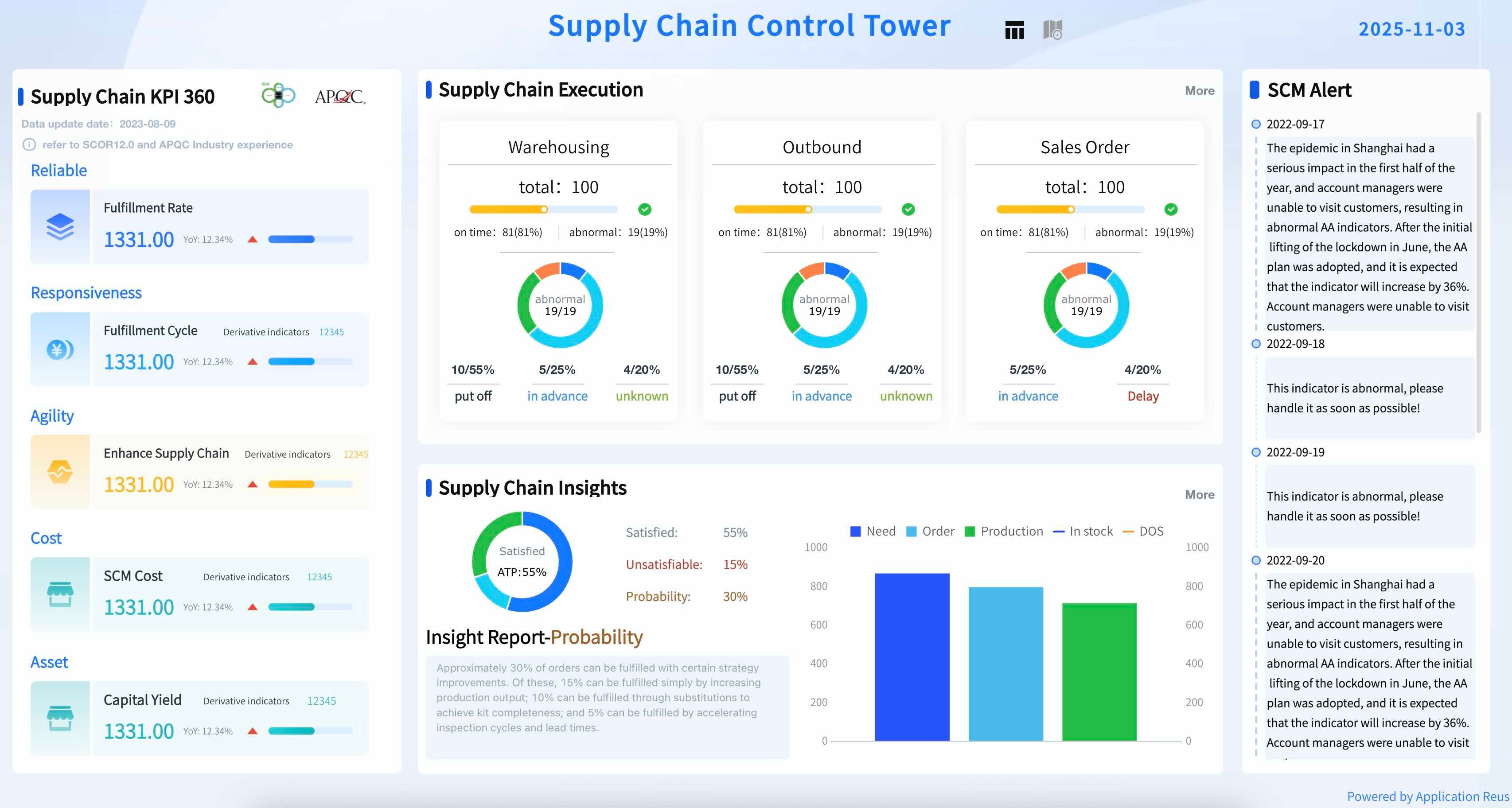
A control tower aggregates data from across the supply chain into a single, unified view. Advanced control towers use AI to identify anomalies, predict disruptions, and recommend actions. They transform supply chain management from reactive fire-fighting to proactive orchestration.
Getting Started: A Practical Approach
Digital transformation does not require a massive upfront investment. Start with high-impact, low-complexity pilots: IoT monitoring for your most critical shipments, demand sensing for your top 20% of SKUs, or a basic control tower for your most important supply chain lane. Prove value, then scale.
Key Success Factors: Start with a business problem, not a technology solution. Ensure data quality before deploying analytics. Invest in change management — technology without adoption is waste. And partner with experts who understand both supply chain operations and digital technology.
SupplySourceSync guides manufacturers through digital supply chain transformation — from strategy through implementation. Explore our digital transformation services or learn how Exceleor LLC and OPZ360 support Industry 4.0 initiatives.
Need Supply Chain Expertise?
Our team can help you implement the strategies discussed in this article. Download our free resources or schedule a consultation.