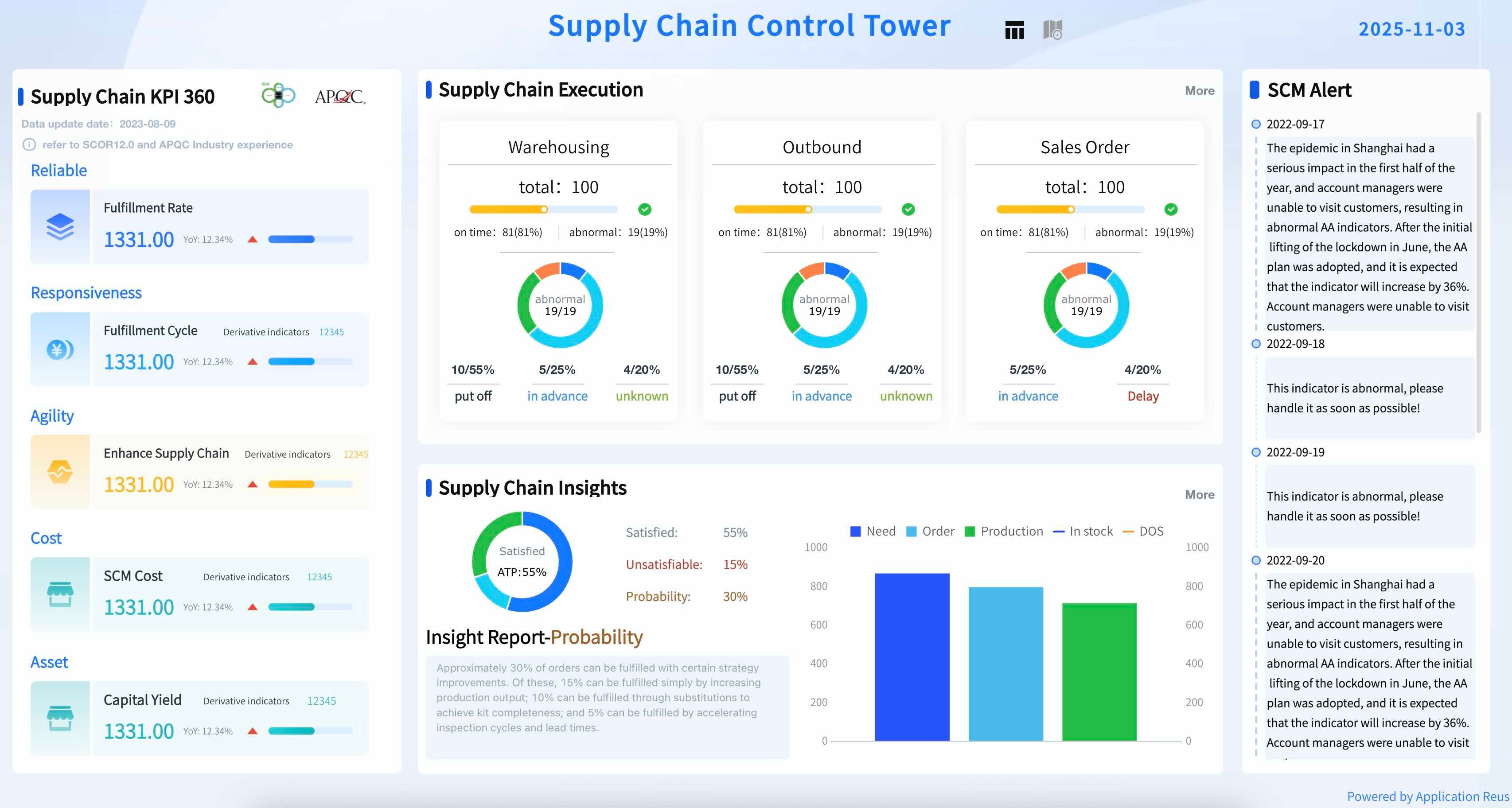
Supply Chain Analytics: KPIs That Actually Drive Decisions
The Dashboard Trap
Modern supply chains generate enormous amounts of data, and it is tempting to display all of it. The result is dashboards packed with dozens of metrics that no one acts on — impressive to look at, useless for decisions. Effective supply chain analytics is not about tracking everything; it is about tracking the few measures that reliably predict outcomes and trigger action.
The KPIs That Matter Most
A focused supply chain scorecard usually centers on a handful of proven measures:
- Perfect order rate — the percentage of orders delivered complete, on time, and damage-free. It captures end-to-end execution in one number.
- On-time in-full (OTIF) — delivery reliability as customers actually experience it.
- Inventory turns and days of supply — how efficiently working capital is deployed.
- Cash-to-cash cycle time — how long capital is tied up across the chain.
- Supplier performance — quality (PPM) and delivery reliability by supplier.
- Forecast accuracy — because most downstream problems trace back to demand signal quality.
Structure Metrics in a Hierarchy
Executives need a small set of outcome metrics; operators need the diagnostic detail beneath them. Build a hierarchy so a high-level number (say, declining OTIF) can be drilled into its drivers (a specific supplier, lane, or facility). Metrics that cannot be drilled into create alarm without direction.
Pair Every Metric With an Owner and a Threshold
A KPI without an owner and a defined action threshold is just decoration. For each metric, define who is accountable, what "good" looks like, and what happens when it breaches the threshold. This is what converts a dashboard from a reporting tool into a management system.
Move From Hindsight to Foresight
The most valuable analytics look forward. Leading indicators — forecast accuracy, supplier risk scores, order backlog trends — let you act before a problem shows up in the lagging outcome metrics. Even simple predictive views of demand and supplier delivery risk shift the organization from explaining the past to shaping the future.
Start Small, Build Trust
Analytics adoption fails when it launches as a massive, complex platform. Start with a handful of trusted, accurate metrics that people actually use to make decisions, then expand. Credibility of the data matters more than sophistication of the tool — a simple metric people believe beats an advanced one they ignore.
SupplySourceSync helps manufacturers design analytics and KPI frameworks that drive real supply chain decisions. Explore digital supply chain transformation or request an analytics review.
Need Supply Chain Expertise?
Our team can help you implement the strategies discussed in this article. Download our free resources or schedule a consultation.