Building Supply Chain Resilience Against Tariffs and Geopolitical Disruption
Geopolitical Risk Is the New Normal
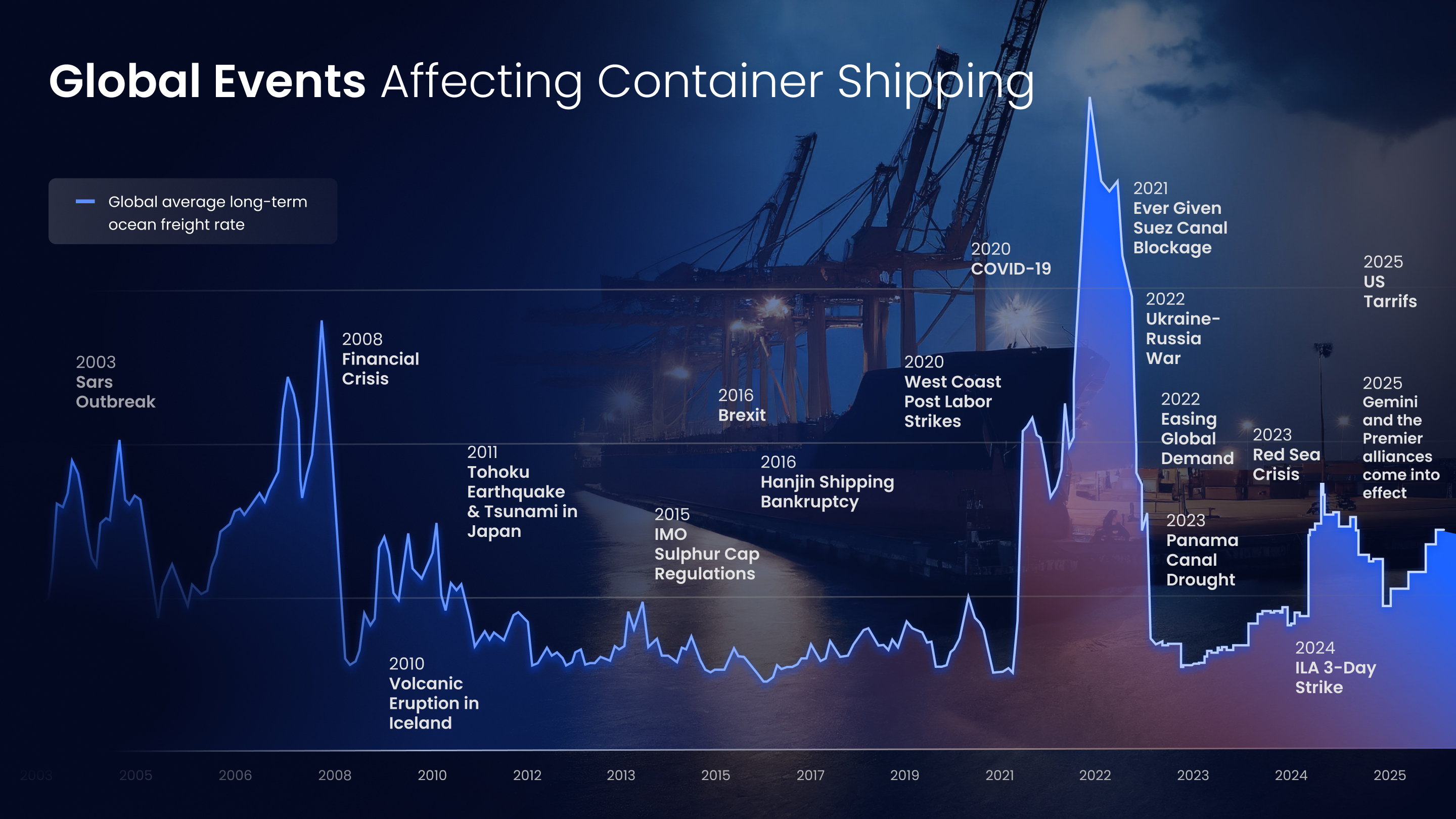
Tariff shifts, export controls, trade disputes, and regional instability are no longer rare events to be weathered and forgotten. They are a permanent feature of the global sourcing landscape. Manufacturers that treat each new tariff or disruption as a one-off crisis will spend the decade firefighting. Those that build structural resilience will turn volatility into competitive advantage.
Map Your Real Geographic Exposure
Most companies dramatically underestimate their concentration risk because they only look at tier-one suppliers. A component may be bought from a domestic distributor whose sub-tier supplier — and the raw material beneath that — traces back to a single high-risk region. Map your supply chain to the sub-tier level to reveal true country-of-origin exposure. You cannot diversify a risk you cannot see.
Diversify Deliberately, Not Reactively
Resilience comes from options. For critical, high-exposure components, develop qualified suppliers across multiple regions so a tariff or disruption in one geography does not halt production. This dual- or multi-region sourcing carries a modest cost premium, but it should be evaluated as insurance against the far larger cost of a sudden supply stoppage or a punitive tariff with no alternative.
Model Tariff Scenarios Before They Hit
Reactive tariff management is expensive. Instead, build scenario models: if a tariff is imposed on region X, what is the cost impact, and what is our pre-planned response? Knowing your alternatives — qualified suppliers, tariff engineering options, country-of-origin strategies — before an announcement lets you act in days rather than months while competitors scramble.
Balance Efficiency With Buffers
Pure just-in-time optimization maximizes efficiency but minimizes resilience. For critical items with geopolitical exposure, strategic buffer inventory and flexible contract terms provide the breathing room to execute a sourcing shift without stopping production. The goal is not to abandon efficiency but to place resilience investments precisely where disruption would hurt most.
Make Resilience a Standing Capability
The manufacturers who thrive are not the ones who predict the next disruption — no one can. They are the ones who have built the standing capability to respond: visible sub-tier maps, qualified alternatives, pre-modeled scenarios, and targeted buffers. Resilience is not a project you finish; it is a capability you maintain, and it is increasingly the difference between market leaders and the companies that fall behind them.
SupplySourceSync helps manufacturers map exposure, diversify sourcing, and build resilience against tariffs and geopolitical disruption. See our risk and resilience services or request a resilience assessment.
Need Supply Chain Expertise?
Our team can help you implement the strategies discussed in this article. Download our free resources or schedule a consultation.