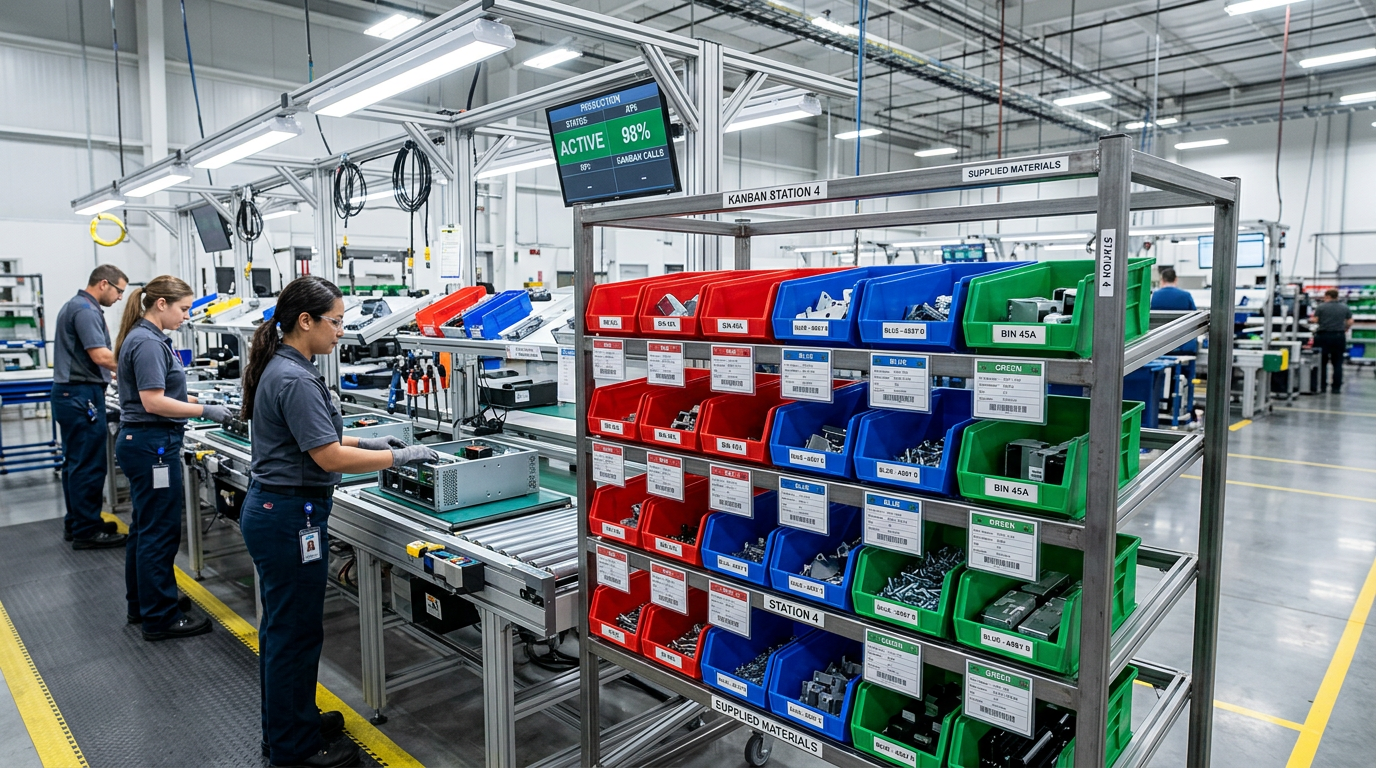
The Kanban Revolution: How Pull Systems Transformed a $500M Manufacturer
Push systems build to forecast and hope demand shows up. Pull systems build to actual consumption. For one multi-site, $500M manufacturer, making that shift with discipline reduced inventory costs by 34% while fill rates climbed to 99.2%.
This is the story of what was wrong, and what changed. It is not a recipe. Every plant's version of the problem is different, which is why the answer has to be built around the actual operation.
The Symptoms Before the Change
- Warehouses full of parts nobody needed this month, while lines waited on the parts they did need.
- A daily shortage list that drove the whole morning meeting.
- Buyers placing orders manually, with delays and errors built into every replenishment.
- Forecast changes rippling through MRP and creating new excess every cycle.
Why Push Was So Expensive
MRP-driven push accumulates inventory where forecasts are wrong and starves lines where they are optimistic. The result is simultaneous excess and shortage, the worst of both worlds: cash tied up in the wrong parts, plus expediting and overtime to cover the missing ones.
Why Earlier Attempts Hadn't Worked
Like many manufacturers, this one had tried inventory reduction targets and cycle counts. Cutting stock without changing how replenishment was triggered simply created more shortages, and the inventory crept back as soon as the pressure eased.
What Changed
Replenishment moved from forecast to actual consumption, grounded in a complete understanding of every part and its supply. Supplier delivery expectations were made explicit, and replenishment signals flowed to suppliers without manual buying delays. Pull became self-sustaining rather than a project that depended on a few champions.
What the Turnaround Typically Looks Like
Across the engagement, inventory turns improved dramatically, the daily shortage list collapsed and fill rates climbed to 99.2%, with inventory costs down 34%. Less cash in inventory and better service at the same time: that is what disciplined pull delivers.
Frequently Asked Questions
Can kanban really reduce inventory and improve fill rate at the same time?
Yes. Push systems create excess and shortage simultaneously. Pull aligns replenishment with actual consumption, which lowers inventory and improves availability together.
Why do kanban implementations fail?
Usually because they are treated as a card system rather than an operating change. Without an accurate foundation of part data and supplier commitment, the loops drift and the plant falls back to push.
Is kanban right for every part?
No. Some parts are better suited to other replenishment methods. Deciding which parts belong in pull is part of the design work.
If This Is Your Situation
"My company needs to implement kanban to control inventory and cut cost. What do I do?" If that sentence sounds like your week, you don't need another article. You need someone who has fixed it before to look at your specific situation. See how we approach this situation, or request a Situation Review. Tell us what's going on in a few sentences and we'll come back with how we'd tackle it. It's a conversation, not a sales pitch.
Related reading: Why Kanban Implementations Fail · Inventory Optimization
Need Supply Chain Expertise?
Our team can help you implement the strategies discussed in this article. Download our free resources or schedule a consultation.